Sr. Luísa Almendra, RSHM (2025-2026)
.png)
Sr. Luísa Almendra, RSHM is a visiting scholar from the Universidade Católica Portuguesa (Catholic University of Portugal). and a religious member of the Institute of the Religious of the Sacred Heart of Mary. She holds a Ph.D. in Biblical Theology from Universidade Católica Portuguesa and the Pontifical Biblical Institute in Rome, Italy (2005), as well as a master’s degree in biblical sciences (1997) from the Pontifical Biblical Institute in Rome, Italy. She is a senior lecturer in Old and New Testament studies, Biblical Hebrew language, and religious culture at the Faculty of Theology at the Catholic University of Portugal. She has authored several essays on Biblical Wisdom Literature and is an active member of the International Society for the Study of Biblical and Semitic Rhetoric (RBS), L'Association Catholique Française pour l'Étude de la Bible (ACFEB), and the Society of Biblical Literature (SBL). She has been an invited professor at Pernambuco Catholic University (UNICAP - Recife, Brazil) and the Institut Catholique de Toulouse (ICT - Toulouse, France). She served as the Director of the Research Centre for Theology and Religion Studies (CITER) and remains a full member of this Centre. Her research interests mainly include Biblical Wisdom Literature, Biblical and Semitic Rhetoric, Biblical Intertextuality, and the intersection of Bible and Literature/Art. Recently, she was appointed as the titular head of the Chair of Jewish and Christian Biblical Studies. The Chair aims to foster an innovative critical-hermeneutic approach to the Jewish and Christian Scriptures, broadening a research area that has so far been insufficiently explored.
Dr. Almendra is teaching “Dynamics of Wisdom Theological Studies” in the LMU’s graduate theology program during the fall 2025 semester. In spring 2026, in collaboration with Professor Jennifer Abe, Sr. Luísa will lead an RSHM-based spiritual formation program that is responsive to the cultural and needs of the LMU community, with particular attention to women’s spiritualities.
Schedule for the series, titled Connecting Faith to the Real, is as follows:
Wednesday, March 11th @ 4:00 – 5:30pm in the Marymount Center (UHall 3002): Public Lecture by Dr. Luísa Maria Almendra, RSHM
Sr. Luísa will introduce the RSHM charism, drawing from the biblical wisdom tradition, in examining the critical connection between one’s interior life (what do I believe?) and intentional living (how do I live?). The lecture is open to all.
Saturday, March 21st @ 9am – 3pm in the Marymount Center (UHall 3002): RSHM Spirituality Retreat
Sr. Luísa and Jennifer Abe will guide participants in exploring these questions (What do I believe? How do I live?) as part of their inner journey towards life-giving awareness and authenticity. LMU faculty, staff, and students will have priority. Any individuals affiliated with the RSHM tradition, including Marymount high schools, are also encouraged to participate. Capacity: 25 participants
Tuesday, March 24th @ 2:30 – 5pm: Site Visit to A Place Called Home (with Sr. Pat Connor)
The RSHM sisters were instrumental in establishing and supporting A Place Called Home. The mission is to empower youth in South Central Los Angeles through a vibrant array of programs in the arts, educational enrichment, academic support and wellness. Capacity: 20 participants, shuttle provided.
Register to attend one or more of the events in this series.
Will Pupa (2007-2025)
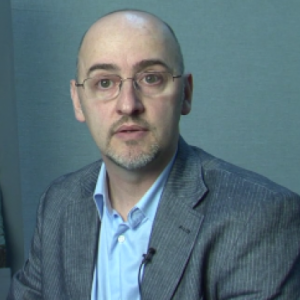
Will Pupa is Clinical Assistant Professor in the College of Communication and Fine Arts at LMU and was artist-in-residence in the Marymount Institute from 2007 through May 2025.
Will was born in California to Italian-American parents who both came from the same province, “Caserta” in the “Campania” region of Italy near Naples. He grew up in Southern California. Will did his BFA in sculpture at CSULB and then went to study in Florence at the Academy of Fine Arts and completed his degree in sculpture in Carrara, Italy. In addition to these formal studies, Will also attended artistic anatomy courses for two years at the Academy of Fine Arts in Budapest. After ten years in Europe, the last two of which were devoted to an apprenticeship in the studio of a leading figurative Italian sculptor in Pietrasanta, Will returned to California.
In California, Will taught Figure Drawing and Figure Sculpture courses at community colleges, art schools, and universities. He has been teaching at LMU since 2001 and directs LMU‘s annual summer study abroad program to Tuscany, Italy. Will also continues to pursue his own artistic work. He acquired the studio of his teacher, Marcello Tommasi, in Pietrasanta, Italy, and uses the studio to offer private lessons and complete commissioned works. Will has designed and executed several sculptures on the LMU campus, including:
- The Nine Muses (2006), located on the outside patio of the Marymount Center, in the Margaret R. Bove Meditation and Sculpture Garden.
- Ud Vitam Habeant (That All May Have Life) (2010), located on the outside patio of the Marymount Center, in the Margaret R. Bove Meditation and Sculpture Garden.
- Ad Astra per Aspera (Through Suffering to the Heavens) (2012), to honor and remember students who died during their time at LMU; located on the Bluff, directly behind Sacred Heart Chapel tower.
- Robert B. Lawton Bust (2014), located along Palm Walk, next to Drollinger Stage.
Most recently as artist-in-residence for the Marymount Institute, Will organized a series of contemplative art-making workshops, “Returning to Our Senses” in spring 2025, including sessions on collage, inkwash, and clay making.
Wole Soyinka (2008-2014)
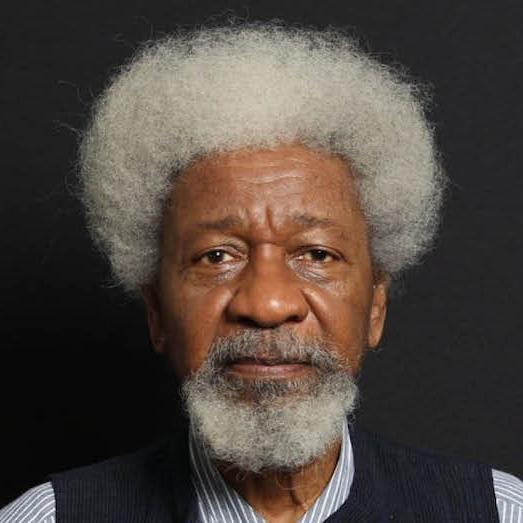
The Nobel Laureate Wole Soyinka served as the President’s Marymount Institute Professor in Residence at the LMU from 2008 to 2014.
Wole Soyinka was born on July 13, 1934 in Abeokuta, near Ibadan in western Nigeria. He was educated at St. Peter’s Primary School, Abeokuta Grammar School, and Government College Ibadan. He pursued university studies first at University College Ibadan (1952-1954), where he studied English literature, Greek, and history and then in England, at the University of Leeds, where he studied English literature, graduating in 1958. He was dramaturgist at the Royal Court Theatre in London in 1958-1959. In 1960, he was awarded a Rockefeller fellowship and returned to Nigeria to study African drama. At the same time, he he taught drama and literature at various universities in Ibadan, Lagos, and Ife. He founded the theatre group “The 1960 Masks” in 1960 and the Orison Theatre Company in 1964. He has received honorary doctorates from many universities, including Leeds, Yale, Harvard, Toronto, Princeton, and LMU.
In 1967, during the civil war in Nigeria, the Nigerian government arrested Soyinka for calling for a ceasefire, accusing him of conspiring with the Biafra rebels. He was imprisoned for 22 months until 1969. His 1972 book about his prison experiences, The Man Died: Prison Notes, was banned by a Nigerian court in 1984. A decade later, in November 1994, Soyinka fled from Nigeria and then went to the U.S. The government of General Sani Abacha charged Soyinka with treason in 1997. In the same year, Soyinka became the second president of the International Parliament of Writers, an organized established in 1993 to provide support for writers facing persecution.
Soyinka writes in English. Many of his works draw on the mythology of the Yoruba, with Ogun, the god of iron and war, at the center and incorporate elements of traditional African theatre with its combination of dance, music, and action.
Soyinka wrote his first plays during his time in London, The Swamp Dwellers and The Lion and the Jewel (a light comedy), which were performed at Ibadan in 1958 and 1959 and were published in 1963. Later, satirical comedies are The Trial of Brother Jero (performed in 1960, published 1963) with its sequel Jero’s Metamophosis (perf. 1974, publ. 1973), A Dance of the Forests (perf. 1960, publ. 1963), Kongi’s Harvest (perf. 1965, publ. 1967), and Madmen and Specialists (perf. 1970, publ. 1971). In addition to The Swamp Dwellers, Soyinka’s more serious philosophical plays include The Strong Breed (perf. 1966, publ. 1963), The Road (1965), and Death and the King’s Horseman (perf. 1976, publ. 1975). In The Bacchae of Euripedes (1973), he transformed the Bacchae for the African stage, and in Opera Wonyosi (perf. 1977, publ. 1981), he based himself on John Gay’s Beggar’s Opera and Brecht’s The Threepenny Opera. Soyinka’s latest dramatic works are A Play of Giants (1984) and Requiem for a Futurologist (1975).
Soyinka’s poems, which show a close connection to his plays, are collected in Idanre, and Other Poems (1967), Poems from Prison (1969), A Shuttle in the Crypt (1972), the long poem Ogun Abibiman (1976), and Mandela’s Earth and Other Poems (1988). In addition to several short stories, Soyinka has written three novels, The Interpreters (1965), a work that has been compared to Joyce and Faulker, in which six Nigerian intellectuals discuss and interpret their African experiences; Season of Anomy (1973), which is based on the writer’s thoughts during his imprisonment and confronts the Orpheus and Euridice myth with the mythology of the Yoruba; and Chronicles from the Land of the Happiest People on Earth (2021). Purely autobiographical works are The Man Died: Prison Notes (1972), Aké: The Years of Childhood (1981), and You Must Set Forth at Dawn (2006). Soyinka’s literary essays are collected in, among other volumes, Myth, Literature, and the African World (1976), The Burden of Memory, the Muse of Forgiveness (2000), and Climate of Fear: The Quest for Dignity in a Dehumanized World (2005).
Wole Soyinka was awarded the Nobel Prize for Literature in 1986, becoming the first African laureate. His Nobel acceptance speech “The Past Must Address Its Present” was dedicated to Nelson Mandela and criticized the apartheid system of racial segregation in South Africa.
During his time at LMU, Soyinka developed cultural events, participated in conversations with other artists and scholars, and regularly met with students to discuss his work. Events with Professor Soyinka included:
- Inaugural Global Conversation: Wole Soyinka + Henry Louis Gates, Jr. (March 22, 2022). Watch the video.
- Interview with Nobel Laureate Wole Soyinka after giving the 2014 LMU Graduate Commencement address (May 14, 2014). Watch the video.
- With author Karima Bennoue, Your Fatwa Does Not Apply Here (September 10, 2013). Read the LMU Magazine article.
- With Vivien Goldman, Pan-African Vision and Expression: The Music and Activism of Bob Marley and Fela Anikulapo-Kuti (April 18, 2013)
- The Bacchae of Euripedes, adapted by Wole Soyinka; directed by Kevin Wetmore; presented by the College of Communication & Fine Arts (February 2012)
- A Screening of Samarkand, with Wole Soyinka and Theresia de Vroom (December 6, 2012)
- A Screening of The Naked Option: A Last Resort, Q&A with Wole Soyinka, Candace Schermerhorn, and Theresia de Vroom (February 13, 2012)
- With Chuck Rosenthal, Roads Taken (March 29, 2011)
- A Screening of Teza “Morning Dew”, Q&A with Wole Soyinka and Haile Gerima (February 18, 2011)
- A Literary Conversation with Wole Soyinka and Ngugi wa Thiong’o (February 8, 2010)
- A Poetry Reading by Prof. Wole Soyinka and Prof. Gail Wronsky (November 23, 2009)
- Bellarmine Forum: Africa’s Children's and the Renaissance Dream (October 28, 2009)
- Samarkand (March 29, 2008) – An evening when Professor Soyinka turned the LMU campus into a global marketplace, capturing the imagery from his book of poems Samarkand and Other Markets I Have Known (2002). The market included international merchants, musicians, poets, religious leaders, and performers such as Danny Glover, CCH Pounder, and Michael Learned. Watch the video.